


Prostate cancer can grow without any symptoms you can feel. This is most true early on. Many men feel fine even when cancer is there. So what are the symptoms of prostate cancer? Symptoms may not show up until the cancer grows. That is why it helps to talk with your doctor about screening and your own risk.
The prostate is a small gland below the bladder. It helps make semen. As men age, the prostate can grow larger. That and other problems can change how you urinate (pee) and how sex works. These changes do not always mean cancer. But symptoms that last or seem odd should be checked.
Possible warning signs include:
- A weak urine stream.
- Trouble starting to urinate.
- Getting up often at night to urinate.
- A feeling that your bladder is not empty.
- Blood in your urine or semen.
- Pain that does not go away.
- Weight loss with no clear reason.
- New problems with sex.
Symptoms alone cannot prove you have prostate cancer or rule it out. A doctor or nurse can look at your health history, check your symptoms, and talk with you about tests. The right tests depend on your age, your family history, and your own risk.
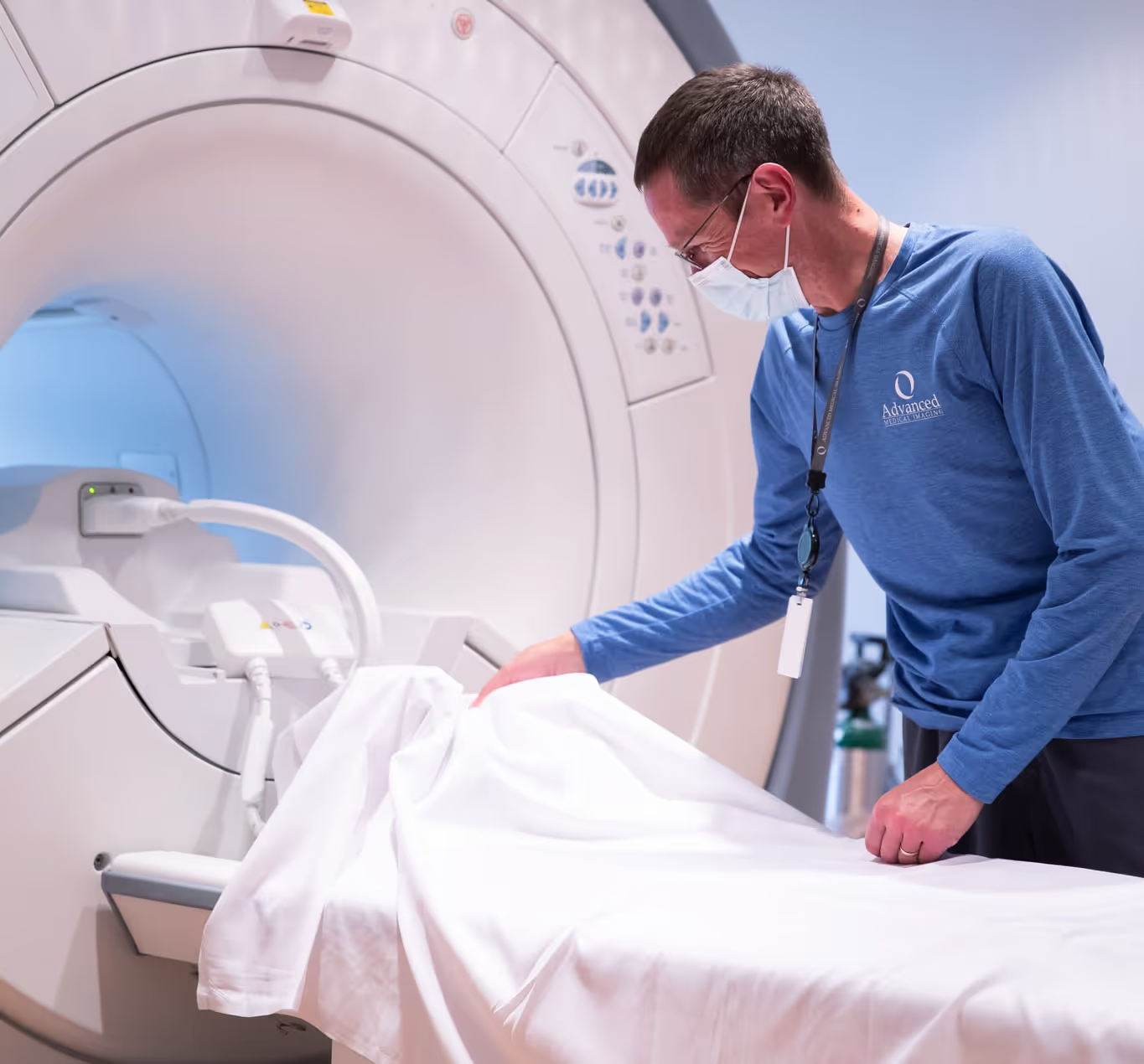
For patients in Lincoln, Nebraska, Advanced Medical Imaging (AMI) offers prostate MRI in Lincoln, NE and other imaging. Our radiologists are board-certified and have extra training in their fields. A radiologist is a doctor trained to read medical images. When your doctor orders imaging, AMI works with your care team.
Early Signs and Warning Signs of Prostate Cancer
Early prostate cancer often has no symptoms. Cancer can be there before you notice any change. So waiting for signs to show up is not a good way to check on your prostate.
When symptoms do show up, they can look like the signs of other prostate problems. One is an enlarged prostate, also called benign prostatic hyperplasia or BPH. Another is a swollen prostate. The prostate sits near the bladder and the urethra. The urethra is the tube that carries urine out. So prostate changes can get in the way of urinating.
Possible early signs include:
- Trouble starting or stopping when you urinate.
- A weak or slow stream, or one that stops and starts.
- A need to urinate more often, day or night.
- A sudden, strong need to urinate.
- A feeling that your bladder is not empty.
- Blood in your urine or semen.
- Burning or pain when you urinate.
Not every man with prostate cancer has these signs. And having them does not mean you have cancer. A urinary tract infection, a swollen prostate, bladder problems, and other health issues can cause the same changes. A doctor or nurse can check your symptoms and decide if you need more tests.
Your age and family history matter too. The risk of prostate cancer goes up as men get older. Having a close family member with prostate cancer may raise your risk.
No symptoms does not mean screening is not for you. Talk with your primary care doctor or a urologist about your own risk. A urologist is a doctor who treats the prostate and the urinary system. They can explain the good and bad sides of each screening test. The right plan depends on you and your health history.
If you notice blood in your urine or semen, or changes in how you urinate that do not go away, make an appointment. Do not wait for it to get worse. An early check can help find the cause.
Urinary Changes, Sexual Symptoms, and Pain
Changes in how you urinate are the signs men notice most with prostate problems. But these changes are not only caused by cancer. Tell your doctor when the symptoms began, how often they happen, and what else you have noticed. That helps your doctor choose the right tests or treatment.
Urinary changes. Common signs are urinating more often, mostly at night. You may have trouble starting or keeping a steady stream. Your bladder may not feel empty. Burning when you urinate and blood in your urine also need a doctor's care.
An enlarged prostate can press on the urethra and make it hard for urine to pass. Swelling and infection can also cause pain or change your bathroom habits. Prostate cancer may cause the same signs, mostly as it grows. Early prostate cancer often causes no signs at all.
Get blood in your urine checked soon. It can be a sign of a few problems that need care. Burning when you urinate may come from an infection or swelling. By itself, it should not be taken as a sign of prostate cancer. Based on the cause, treatment may be medicine, changes in daily habits, or other care your doctor suggests.
Sexual changes. Erectile dysfunction means trouble getting or keeping an erection. It has many causes. These include blood flow problems, diabetes, side effects from medicine, stress, and other health problems. By itself, it is not a good sign of prostate cancer.
Still, talk with a doctor about erection problems that are new or do not go away. This matters more if you also have urinary changes or other symptoms with no clear cause.
Pain. Pain in the pelvis, low back, hips, or other spots has many causes. Sore muscles and arthritis are two. Pain that lasts or has no clear cause should be checked. This matters more if you also have urinary changes, feel very tired, or are losing weight without trying.
The American Cancer Society says men should talk with their doctor about the good sides, limits, and risks of prostate cancer screening. This talk matters because prostate cancer can grow with no symptoms. The choice to screen should fit your age, family history, health, and risk.
When you see your doctor, share when your symptoms started, if they happen more often now, and how they change your day. With that and your health history, your doctor can decide if you need a PSA test, imaging, or other checks.
Symptoms That May Signal Advanced Prostate Cancer
Prostate cancer that grows or spreads past the prostate may cause symptoms in other parts of the body. Not every patient has these signs. Many of them have causes that are not cancer.
Possible signs of advanced cancer include:
- Bone pain that does not go away: Pain in the back, hips, ribs, or thighs may need a check. This is most true if it has no clear cause or does not get better.
- Weight loss with no clear reason: Losing weight when you have not changed how you eat or move may point to a health problem.
- Feeling very tired: If you stay very tired even with enough rest, talk with a doctor.
- Leg swelling: New swelling may come from blood flow problems or other health issues that need a check.
- Urinary problems that get worse: More trouble urinating may mean a blockage or another prostate problem that needs care.
When prostate cancer spreads to other parts of the body, it is called metastatic prostate cancer. The bones are one place it can spread. Cancer in the bones may cause pain that does not go away. But symptoms cannot show if cancer has spread or what stage it is. Only a medical checkup can do that.
Back pain, tiredness, weight loss, and leg swelling can come from many things. What they mean depends on how long they have lasted, if they are getting worse, and if other symptoms come with them.
Your doctor may suggest a physical exam, blood tests, other tests, or a visit with a specialist. Imaging may be right when there is a medical reason to look into a result or to see how far a known cancer reaches.
Do not brush off back pain that lasts, weight loss with no clear reason, or tiredness that will not lift as just part of getting older. If they go on or get worse, see your doctor.
Other Causes, Prostate Tests, and Screening Decisions
Urinary symptoms and sexual changes do not always mean prostate cancer. To find the real cause, you need a checkup made for you. Symptoms alone are not enough.
| Condition | Possible symptoms | How it may be checked |
|---|---|---|
| Enlarged prostate that is not cancer (BPH) | Weak urine stream, urinating often, trouble emptying the bladder | Health history, physical exam, and urine tests |
| Prostatitis (a swollen prostate) | Pelvic pain, pain when urinating, urinating often | A checkup and tests for infection |
| Urinary tract infection | Burning, a sudden need to go, urinating often, sometimes fever | Urine test and a checkup |
| Prostate cancer | May have no early symptoms. Later signs can include urinary changes or pain that does not go away. | A checkup made for you, a PSA test, and more tests when needed |
A few prostate tests can help your doctor check your symptoms. A first visit may cover your health history, family history, symptoms, and general health. Your doctor may suggest a physical exam, a urine test, or a PSA blood test.
PSA stands for prostate-specific antigen. It is a protein made by prostate cells. A blood test measures it. A high PSA does not always mean cancer. An enlarged prostate or swelling can raise it too. And a normal PSA does not rule out every case of prostate cancer.
Based on your symptoms and first results, your doctor may suggest:
- A repeat PSA test, or a look at how your PSA has changed over time.
- A digital rectal exam. The doctor feels the prostate with a gloved finger.
- A visit with a urologist.
- A prostate MRI or a biopsy, when it fits. A biopsy takes tiny pieces of tissue to check for cancer cells.
The National Cancer Institute has facts about prostate cancer screening and what to think about when you choose. Your age, family history, risks, and wishes can all guide your talk with your doctor.
Before your visit, get these ready:
- Your symptoms, when they began, and if they have changed.
- Your medicines, health problems, and past PSA results.
- Any family history of prostate cancer or other cancers.
- Your questions about tests, results, and follow-up care.
When to Seek Medical Care
Not every symptom is an emergency. But some changes should never be ignored.
Call a doctor or nurse soon if you notice:
- Blood in your urine or semen.
- Burning when you urinate that does not go away.
- New pelvic pain.
- Urinary symptoms that get worse.
- Weight loss with no clear reason.
- Bone pain that lasts or tiredness that is not normal for you. This matters more when a few symptoms happen at once.
Get urgent medical care if you have:
- No ability to urinate.
- Heavy bleeding or blood clots in your urine.
- Sudden, severe pain in your back, side, lower belly, or groin.
- Pain with fever, chills, or throwing up again and again.
- Confusion, a high fever, or symptoms that get worse fast.
These signs may point to a serious urinary problem, an infection, or something else that needs care right away. They are not signs of prostate cancer in particular. But waiting could raise the risk of more problems.
For symptoms that are less urgent, make an appointment with your primary care doctor or urologist. Tell them when the symptoms started, how often they happen, and if they have gotten worse. If things change while you wait, call your doctor's office. Ask if you should be seen sooner.
After an exam, your doctor may suggest watching, medicine, tests, a specialist, or treatment. It depends on the cause.
For some patients with low-risk prostate cancer, active surveillance may be a good fit. This means the care team watches the cancer closely and does not start treatment right away. They use PSA tests, checkups, and sometimes imaging or repeat biopsies. Active surveillance is not right for every patient. The choice depends on the cancer, your health, and what you want.
If your doctor orders imaging, ask what the exam is meant to check and how the results may shape your care. MRI and other imaging can give useful facts about the prostate and the tissue near it. But the results must be read along with your health history, your physical exam, and your lab tests.
Take the Next Step With Your Healthcare Team
Knowing what the symptoms of prostate cancer are can help you spot changes that need a check. But symptoms alone cannot tell you if cancer is there. Early prostate cancer often has no signs. Urinary changes, erection problems, and pelvic pain can come from many other things.
The best next step is to talk with a doctor or nurse about symptoms that last or have no clear cause. If screening fits you, your doctor can explain the tests, their limits, and how your own risk plays in. If a result needs a closer look, your care team can set up the right tests and referrals.
For patients in Lincoln and nearby Nebraska towns, Advanced Medical Imaging offers outpatient imaging with modern equipment and service built around the patient. Our radiologists are board-certified and have extra training in their fields. They read your images and work with your doctor to support your care.
If your doctor orders imaging, ask if AMI offers the exam you need. You can learn more on the AMI website or call our team about scheduling and referrals.
Call AMI at (402) 484-6677 or visit us at 7601 Pioneers Boulevard, Lincoln, Nebraska, to learn more about our imaging services. Your doctor can help decide which exam, if any, is right for you.
Request an appointment online or call our scheduling team. We are happy to help you find a time and answer questions about your visit.


