
Our benefits:

Significantly lower costs
Weekend hours available
Accessible, central location
Top quality radiologists
Same-day results
Appointments and walk-ins


Amyloid PET is an FDA-approved imaging exam that detects amyloid plaque in the brain — a key marker of Alzheimer's disease. At Advanced Medical Imaging in Lincoln, this advanced screening helps confirm or rule out Alzheimer's as the cause of memory loss or cognitive symptoms, giving you and your physician clear answers earlier.
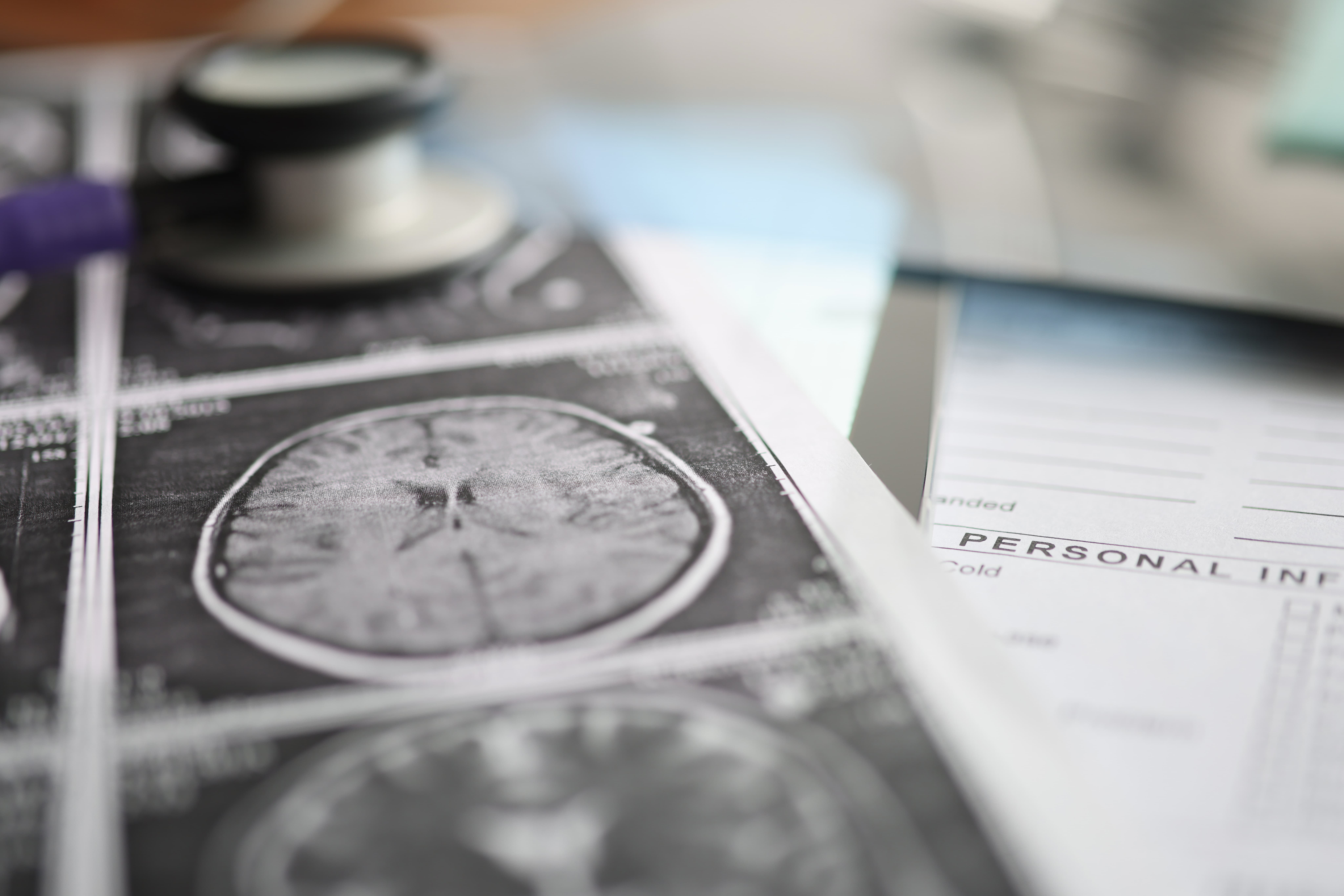

An Amyloid PET (positron emission tomography) scan is a noninvasive brain imaging exam. A small amount of imaging tracer highlights amyloid plaque — abnormal protein deposits strongly associated with Alzheimer's disease. Unlike memory tests alone, an Amyloid PET shows physical evidence of what's happening in the brain, which means a more confident diagnosis with less guesswork.
An Amyloid PET scan may be right for you or a loved one experiencing:
Talk with your physician about whether an Amyloid PET scan is appropriate for your symptoms.
An Amyloid PET scan can:
Is the scan safe? Amyloid PET is FDA-approved and noninvasive, using a small amount of imaging tracer similar to other routine PET exams.
Can Alzheimer's be detected before symptoms appear? Amyloid plaque can build up years before symptoms begin. Screening can detect the earliest signs of Alzheimer's, supporting earlier planning and treatment.
Consider Amyloid PET for patients with MCI, mild dementia of unclear cause, early memory loss with diagnostic uncertainty, atypical/mixed presentations, or candidates for anti-amyloid therapies.
.svg)


MRI’s of the abdomen are commonly performed to detect issues in the liver, gallbladder, digestive tract, and other organs. It can also be used to evaluate the state of blood vessels and organs prior to a surgery or transplant.
MRI’s of the pelvis are commonly performed to detect issues in the bladder, prostate, reproductive organs, lymph nodes, rectum, anus and pelvic bones.
MRI’s of the breast are many times administered after an initial mammogram to further explore abnormalities. Breast MRI’s are ideal for patients with “dense” breast tissue, because MRI images show more detail allowing radiologists to see more than with a standard x-ray image.
Using an MRI machine to guide a biopsy is very efficient because the clear images help radiologists to accurately sample the abnormality.
MRI is frequently used to scan major joints in the body. Including shoulders, wrists, knees and hips. MRI can locate and identify the cause of pain, swelling, and bleeding in the tissues around joints and bones. The images can see tears and injuries to tendons, ligaments and muscles. MRI can also show arthritis and tumors involving bones and joints.
MRI is frequently used to determine the causes of back pain, leg pain and numbness. The exam can detect a bulging, degenerated or herniated intervertebral disk. MRI can be done to help plan surgeries of the spine. MRI performed after surgery will show whether infection or post-op scarring is present. Patients that have had surgery of the spine may require an injection of contrast material.
MRI of the brain is useful in detecting brain tumors, strokes and certain disorders such as multiple sclerosis. MRI can also detect abnormalities of the eyes or inner ear. Most exams of the brain will require an injection of contrast material to enhance the visibility of certain tissues or blood vessels. A small needle is placed into a vein of the hand or arm for the injection.
MRA provides detailed images of blood vessels with or without the use of contrast material. MRA can detect blocking or narrowing of arteries, and can also detect aneurysms, an enlarged artery. Commonly preformed MRA Exams include brain, carotids (neck) and renal arteries.
Magnetic resonance (MR) enterography is used to diagnose inflammation, bleeding, obstructions and other problems in the small intestine. Patients ingest a barium contrast medium before their scan that highlights certain parts of the digestive tract in the images.
AMI is the only outpatient center in Lincoln equipped with the most advanced MRI that provides highly detailed images, faster. The large bore design is made for patient comfort and is ideal for and larger patients.
Advanced Medical Imaging is the first location in the entire midwest to install a HERO 3T with the latest technology. Scan times are reduced by 50% using Air Recon DL.
The most common of MRI machines is used the most often and has many benefits. There is more signal than the 1T open MRI providing a faster and better image. Less signal than the 3T MRI means less noise and heat than the stronger machine.

Please consult with your ordering physician or primary provider before the scan for any special pre-procedure requirements (food and water intake restrictions, etc.)
Patients lie on a table which moves slowly through the large opening of the PET scanner. Scan times vary depending on the region being assessed, but with registration, injection and scan times patients can plan on being at the office for 2 – 3 hours.
Patients can return to normal activities as soon as the scan is complete. The radiologist will determine if there are any abnormalities of the internal organs and bone structures. The radiologist’s interpretation will then be available to the referring physician 24 hours after the exam. The physician’s office will inform patients how to obtain their results.

If you have any further questions about our services, please contact our friendly staff.
Call UsMedicare expanded coverage for amyloid PET scans in late 2023, removing the previous once-per-lifetime limit. Coverage criteria vary by plan and Medicare Administrative Contractor. Our team can help verify your benefits before scheduling. (Confirm with AMI how they want to phrase billing support.)
It detects amyloid plaque in the brain, a key biomarker of Alzheimer's disease. A positive scan supports an Alzheimer's diagnosis; a negative scan makes Alzheimer's unlikely as the cause of symptoms.
Amyloid PET scans are ordered by a physician. Ask your primary care provider or neurologist about a referral to Advanced Medical Imaging.

Our Board Certified Radiologists have a wide-variety of subspecialties and are on call 24 hours a day to ensure the best care is always available, when patients need it most.


.png)


