


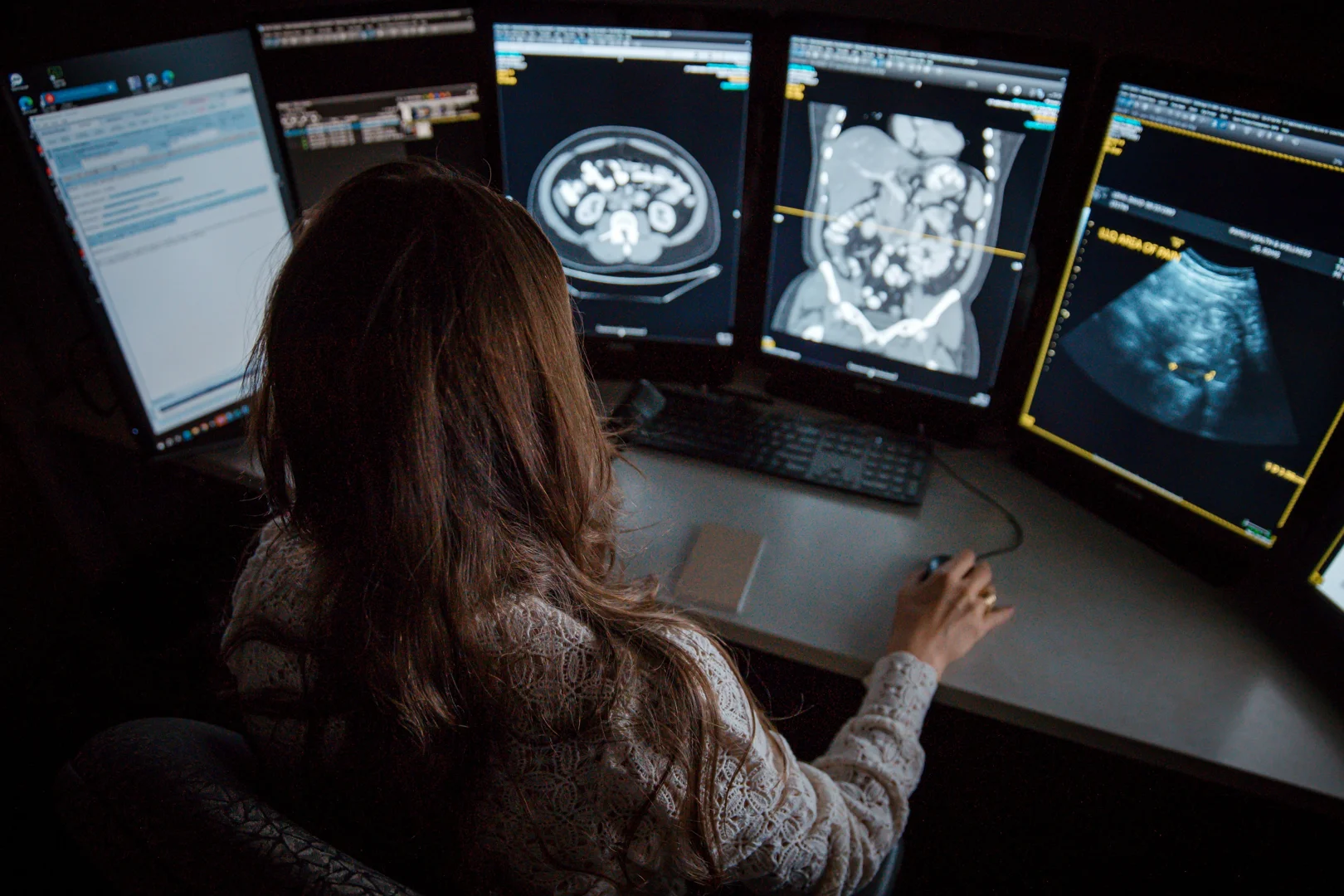
Medical imaging vs diagnostic imaging is a distinction that confuses a lot of people — and for good reason. The two terms are often used interchangeably, even by healthcare providers. But they're not quite the same thing.
Here's the short answer:
Think of medical imaging as the umbrella. Diagnostic imaging and screening imaging both live under it.
The purpose of the scan is what separates them. A routine mammogram to check for early signs of breast cancer is screening. A follow-up mammogram ordered because you found a lump? That's diagnostic.
Understanding this difference helps you know what to expect — and why your provider ordered a particular scan.
When we talk about medical imaging vs diagnostic imaging, we are essentially discussing the evolution of how doctors "see" inside the human body. Historically, if a physician needed to understand what was happening beneath the skin, their options were limited to physical exams or invasive exploratory surgeries. Today, we use sophisticated technology to create a visual representation of the body's interior.
Medical imaging is a broad field that encompasses various techniques used for clinical evaluation and medical intervention. It allows our team to establish a database of your baseline anatomy. By having these "normal" images on file, we can more easily identify subtle changes or abnormalities that may occur in the future.
Whether you are visiting us for a routine check-up or because you aren't feeling your best, diagnostic imaging provides the clues needed to provide accurate answers. It is the foundation of modern evidence-based medicine, moving healthcare from guesswork to precise science.
The FDA defines medical imaging as a set of technologies used to view the human body in order to diagnose, monitor, or treat medical conditions. It is a non-invasive way to look at internal structures—bones, organs, and soft tissues—without the need for an incision.
At Advanced Medical Imaging, we view medical imaging as the total toolkit available to your healthcare team. This toolkit includes everything from the X-ray used to check a suspected broken bone to the complex imaging services used in clinical trials to monitor how a new medication affects a tumor.
As of April 2026, the technology has advanced to the point where we can see not just the structure of an organ, but how it is functioning in real-time. This broad category covers both preventative screenings (done when you feel fine) and diagnostic procedures (done when something feels wrong).
While medical imaging is the "what," diagnostic imaging is the "why." According to the Britannica definition, diagnostic imaging specifically refers to the use of electromagnetic radiation and other technologies to produce images for the purpose of accurate diagnosis.
If you have a persistent cough, a new lump, or unexplained pain, we use diagnostic imaging to investigate the root cause of those symptoms. These scans are often more targeted than a general screening. For example, a diagnostic scan might involve multiple angles, higher magnification, or the use of contrast agents to make specific blood vessels or tissues stand out.
Our goal with diagnostic imaging is to provide your referring physician with a definitive answer so they can create an effective treatment plan for you. We're here for you every step of the way, ensuring that the process of finding those answers is as comfortable as possible.
The primary difference between medical imaging vs diagnostic imaging lies in the patient's symptoms and the physician's intent.
Screening imaging is performed on asymptomatic patients—people who feel perfectly healthy. The goal is early detection. We want to find potential issues before they cause symptoms, which is when they are often easiest to treat. Common examples include annual screening mammograms or low-dose CT lung screenings for former smokers.
Diagnostic imaging is performed when there is a known or suspected problem. Its purpose is to confirm a diagnosis or monitor how well a treatment is working. If a screening reveals an irregularity, the next step is usually a diagnostic scan to get a closer, more detailed look. You can stay up to date on the latest advancements in these techniques by following diagnostic imaging news and updates from our center.
There are several modalities used under the medical imaging umbrella. Each has unique strengths depending on what part of the body we need to see:
When you choose a facility for your scans, it is important to understand the roles of the professionals caring for you. You will likely interact with two different experts: the radiographer and the radiologist.
A radiographer (or radiologic technologist) is the professional who operates the equipment and positions you for the scan. They are experts in the technical side of capturing the image. A radiologist is a medical doctor who specializes in interpreting those images to make a diagnosis.
At Advanced Medical Imaging, our team focuses on providing the highest level of medical imaging in Lincoln by combining advanced technology with the expertise of specialized physicians.
The interpretation of a scan is just as important as the scan itself. This is where sub-specialization makes a significant difference. Our fellowship-trained radiologists have completed extra years of intensive training in specific areas of the body, such as the breast, the musculoskeletal system, or the neurological system.
Advanced Medical Imaging is proud to be the nation's only SphenoCath Certified Training Center and the first in Lincoln to be ACR accredited as a Comprehensive Breast Imaging Center. This means when you come to us, your images are being read by experts who see thousands of similar cases every year. This high volume of specialized experience leads to greater accuracy and more personalized care.
Our fellowship-trained radiologists work closely with your primary care doctor to ensure your results are integrated into your overall health strategy. We believe in physician-led care that puts the patient's needs first, providing value-driven services in a warm, reassuring environment.
What are the risks of radiation in medical imaging?While some imaging types like X-ray and CT use ionizing radiation, the doses are kept as low as possible. In fact, radiation exposure from medical imaging in the U.S. has been carefully monitored and optimized over the years. We always weigh the benefits of an accurate diagnosis against the minimal risks. For those looking to avoid radiation entirely, ultrasound and MRI are excellent radiation-free alternatives.
How long does a typical imaging procedure take?It depends on the type of scan. A standard X-ray can take just a few minutes, while a detailed MRI or a PET/CT scan might take 30 to 60 minutes. Diagnostic scans often take slightly longer than screenings because we may need to take additional views or magnifications to get the most accurate information.
What should I do to prepare for my scan?Preparation varies. For some ultrasounds or CT scans, you might need to fast for a few hours. For an MRI, you'll need to remove all metal objects. Our team will provide you with specific instructions when you schedule your appointment. We are conveniently located with same-day appointments available for many services to fit your busy schedule.
When is diagnostic imaging used instead of screening?If you have symptoms like pain, a lump, or a change in function, your doctor will order diagnostic imaging. If you are at a certain age or have specific risk factors but feel fine, you will likely undergo routine screening. Both are essential tools for maintaining your long-term health.
If you have questions about which type of imaging is right for you, we encourage you to speak with your healthcare provider. Our team at Advanced Medical Imaging is open 7 days a week to fit your schedule and provide the answers you need.
.png)


