


Head pain can be frustrating, especially when it keeps coming back or disrupts your routine. Many people use the words migraine and headache as if they mean the same thing, but they often describe different health experiences. Knowing the difference between migraine vs headache can help you choose better relief, track symptoms with more confidence, and understand when to talk with a doctor.
A headache is typically a symptom that can come from stress, dehydration, sinus pressure, eye strain, poor posture, illness, or many other causes. Migraines are a neurological condition that can cause recurring attacks with head pain, nausea, vomiting, light sensitivity, sound sensitivity, aura, and fatigue. Some people have migraine pain without aura, while others have warning signs before the pain begins.
At Advanced Medical Imaging in Lincoln, Nebraska, patients receive support from board-certified radiologists who help referring providers evaluate concerning or unusual symptoms. AMI offers diagnostic imaging, interventional radiology, and pain management services in a patient-centered setting where quality meets care.
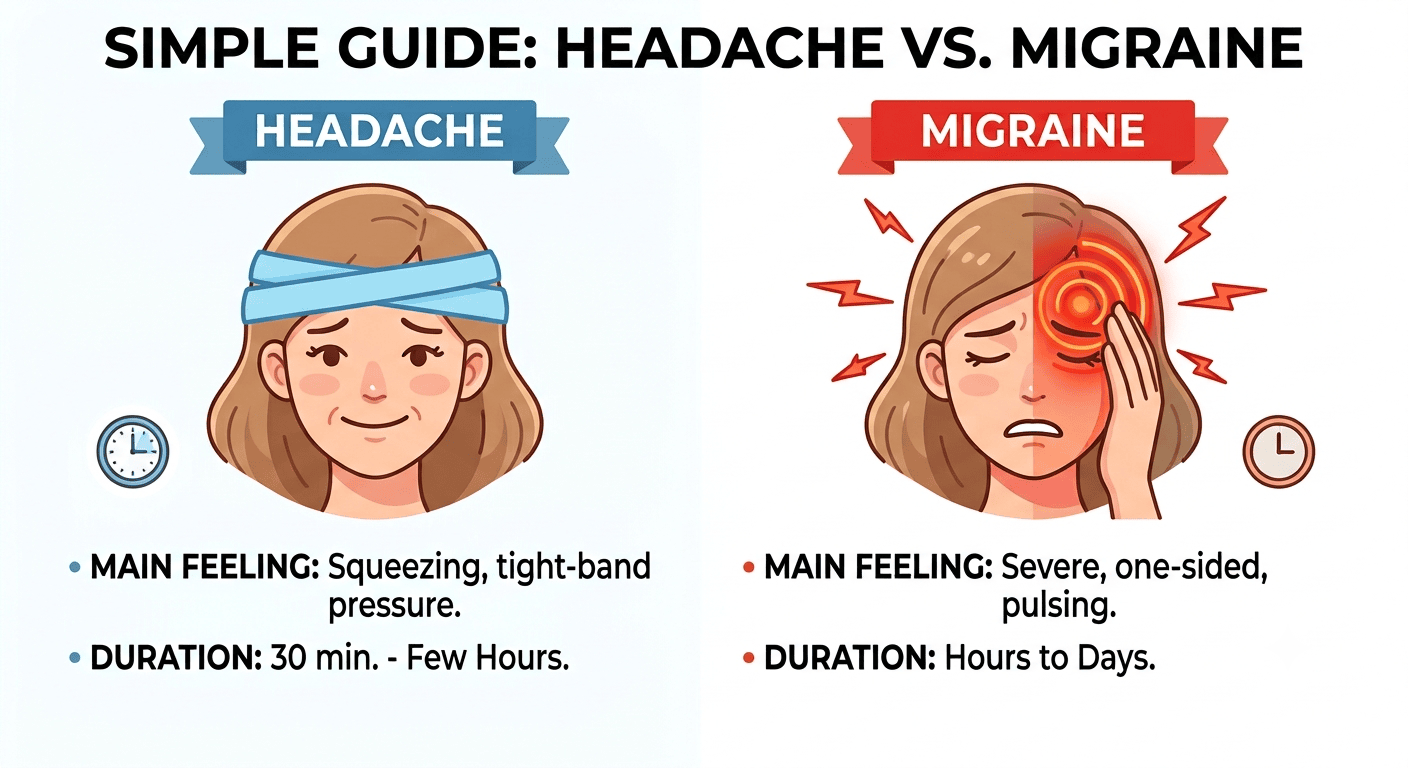
The main difference between migraine and headache is that a headache describes pain, while migraine describes a health condition that may include head pain plus other symptoms. A standard headache may cause pressure, aching, or tightness. A migraine attack often involves a stronger set of symptoms that can affect the whole body.
Migraine pain is often described as throbbing, pulsing, or one-sided. It may become worse with movement, bright light, loud sound, strong smells, or routine activity. Many people need to rest in a dark, quiet room until symptoms improve.
A common headache may be milder and shorter. It may feel like pressure across the forehead, temples, scalp, or back of the head. Many headaches improve with hydration, rest, posture changes, reduced screen time, or over-the-counter medicine used as directed.
Misunderstandings are common. Not every severe headache is a migraine. Not every migraine includes aura. A migraine may also be mistaken for sinus pressure, neck tension, eye strain, or stress-related pain. These overlaps can delay care, especially when symptoms are frequent or changing.
A symptom diary can help your healthcare provider see patterns. Record when the pain starts, how long it lasts, where it is located, what it feels like, and whether nausea, vomiting, aura, or sensitivity to light or sound occurs. This simple habit can make office visits more productive and may help guide treatment.
There are several headache types, and each can feel different. Understanding the likely headache type can help you communicate clearly with your doctor.
Tension headaches are among the most common. They often feel like a tight band around the head or steady pressure across both sides. Stress, poor posture, long screen use, jaw tension, and neck tightness may contribute. Tension headaches don't cause nausea in the same typical pattern seen with migraine, although any painful episode can make a person feel unwell.
A sinus headache is usually linked to sinus infection, allergies, congestion, or inflammation. Pain may feel like pressure in the face, forehead, cheeks, or behind the eyes. True sinus-related pain often comes with nasal symptoms, fever, thick drainage, or worsening pressure when bending forward. Migraine can also cause facial pressure, which is why some people mistake migraine for sinus trouble.
Cluster headaches are less common but can be extremely painful. They often cause sharp pain around one eye, tearing, nasal congestion, restlessness, or eyelid changes. Cluster pain tends to happen in cycles and may last a shorter time than a migraine headache.
Migraine episodes can last for hours or days and may include symptoms beyond pain. The pattern, associated symptoms, and triggers often help separate migraine from other headache concerns.
Migraines are often easier to recognize when you look beyond pain. The full pattern may include changes before, during, and after the attack.
Some people notice a prodrome before pain begins. This can include fatigue, food cravings, mood changes, neck stiffness, yawning, thirst, or trouble concentrating. These symptoms may start hours or even a day before the headache phase.
Aura can also happen before or during migraine. Aura may include flashing lights, zigzag lines, blind spots, tingling, numbness, or speech difficulty. Aura is temporary, but new aura symptoms should be discussed with a healthcare professional. Sudden weakness, confusion, fainting, or vision loss needs urgent care.
During the attack, pain may be moderate to severe. Nausea, vomiting, dizziness, and sensitivity to light, sound, or smell can make work, driving, exercise, and family responsibilities difficult. Afterward, some people feel drained, foggy, sore, or emotionally off balance.
Signs that may suggest migraine include:
A single symptom doesn't always prove the diagnosis. A full symptom pattern gives your doctor better information. If symptoms are new, intense, or different from your normal pattern, medical evaluation is the safest next step.
Headache and migraine symptoms can come from many sources. Stress, dehydration, illness, sleep changes, caffeine shifts, skipped meals, posture, and eye strain can all contribute to head pain. For migraine, the nervous system is more reactive to certain internal and external changes.
Common migraine triggers include stress, poor sleep, hormone changes, certain foods, alcohol, caffeine withdrawal, bright lights, loud sounds, strong smells, weather shifts, and missed meals. Triggers often stack together. For example, a person may tolerate one night of poor sleep, but poor sleep combined with stress, dehydration, and bright light may set off an attack.
Genetics can also play a role. Migraines are often seen in families. Other health concerns, such as sleep apnea, high blood pressure, anxiety, depression, or neck problems, may also affect headache patterns and treatment choices.
Tracking triggers can help patients and providers make better decisions. A diary can show whether attacks follow skipped meals, weather changes, menstrual cycles, late nights, or stressful events. It can also show how well medicine works and whether side effects occur.
Practical steps that may help include:
These habits may not stop every migraine attack, but they can support treatment and help reduce avoidable triggers.
Most headaches and migraines are diagnosed through symptoms, medical history, and a physical or neurological exam. Imaging is not needed for every person with head pain. Still, MRI or CT may be recommended when a doctor wants to rule out other causes.
At AMI, imaging services support referring providers by helping identify or exclude internal abnormalities. MRI uses a strong magnetic field and radio waves to create detailed images of body tissues and organs. CT uses X-ray technology and computer processing to show cross-sectional images of bones, blood vessels, and soft tissues. Both can provide valuable information when symptoms raise concern.
Imaging may be considered if a headache is sudden and severe, begins after injury, changes in pattern, starts later in life, or includes neurological symptoms. A provider may also order imaging when pain is persistent, unusual, or not responding as expected to treatment.
AMI’s approach is focused on quality, comfort, and clear communication. The team works with patients and referring providers to make the imaging process easier to understand. With diagnostic imaging, interventional radiology, and pain management services available in Lincoln, AMI can support patients who need answers and next steps.
Imaging doesn't diagnose migraine itself. It helps rule out other concerns that may mimic migraine or make symptoms more complicated. That distinction matters because the right diagnosis leads to better care.
A migraine specialist, primary care provider, neurologist, or other doctor may help when headaches are frequent, severe, or difficult to control. The right care plan may include lifestyle changes, acute medicine, preventative treatment, therapy, imaging, or other services based on symptoms and health history.
AMI’s role is to support that plan when imaging, interventional radiology, or pain management services are appropriate. AMI’s board-certified and subspecialized radiologists interpret scans with careful attention to detail. The interventional radiology and pain management teams also offer minimally invasive procedures in an outpatient setting.
AMI also provides SphenoCath SPG block treatment for migraine and chronic headache pain. This needle-free procedure delivers medication through the nasal passages to reach the sphenopalatine ganglion, a group of nerves involved in certain headache disorders. It may not be right for every patient, but it can be discussed with a provider when chronic headache or migraine symptoms continue to interfere with daily life.
Patients should seek urgent care for a sudden worst-ever headache, weakness, confusion, fainting, fever with stiff neck, seizure, vision loss, or trouble speaking. These symptoms need prompt attention.
For non-emergency but ongoing concerns, schedule a visit with your healthcare provider. If imaging or interventional care is recommended, AMI offers a caring outpatient experience in Lincoln.
Living with recurring head pain can be stressful, but the right information can make the path forward feel clearer. Knowing whether your symptoms fit a migraine pattern, a tension headache, sinus-related pain, or another condition helps your provider recommend better treatment.
AMI supports patients and referring providers with advanced diagnostic imaging, subspecialized radiology interpretation, interventional radiology, and pain management services. The team is committed to treating patients like family while offering technology and services that help guide care.
If you're dealing with persistent, severe, changing, or unusual head pain, talk with your doctor about your symptoms. Ask whether imaging or a referral to Advanced Medical Imaging may help clarify the cause and support your next step.
To request an appointment with AMI in Lincoln, call or use the online appointment request form. Clear answers, compassionate care, and the right diagnostic support can help you move toward relief with greater confidence.
.png)


