


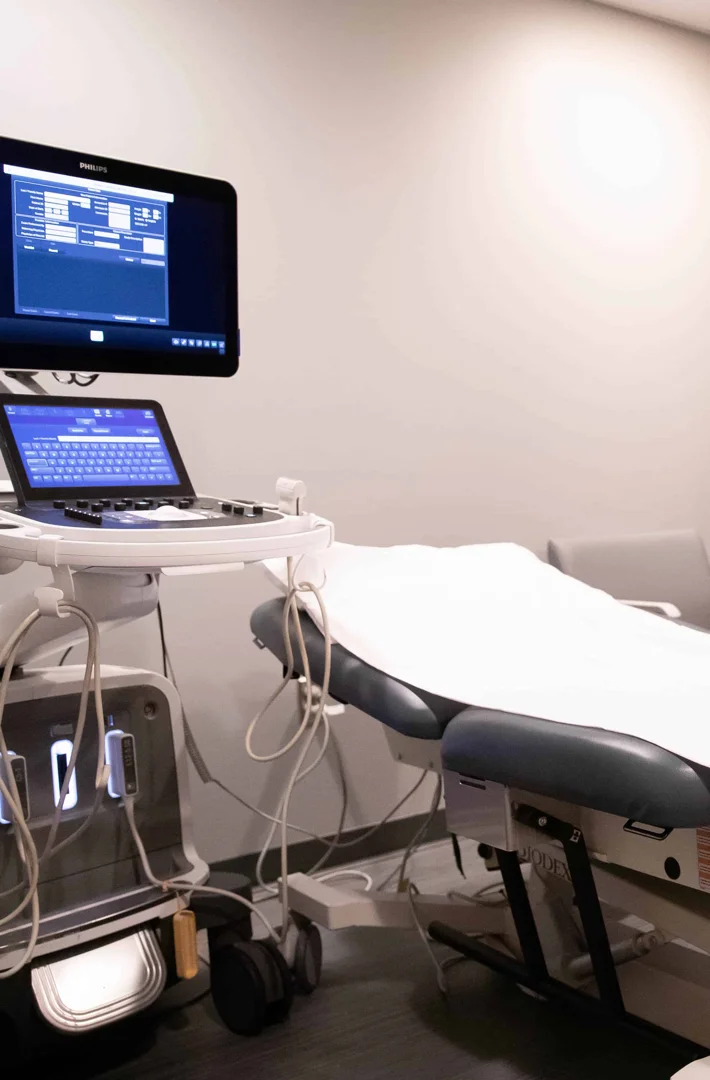
Ultrasound preparation is the set of steps you take before your scan to make sure the images are as clear and accurate as possible. Get it right, and your radiologist gets the best possible view of what's happening inside your body. Get it wrong, and your appointment may need to be rescheduled.
Here's a quick overview of what ultrasound preparation typically involves:
Most ultrasound exams are painless, take between 15 and 60 minutes, and involve no radiation whatsoever. A sonographer moves a small handheld device called a transducer over your skin, and high-frequency sound waves create real-time images of your internal structures.
The reason preparation matters so much is simple: things like food, gas, or an empty bladder can block or blur the sound waves — making it harder for our fellowship-trained radiologists to see what they need to see. A little preparation goes a long way toward getting you accurate answers, faster.
We're here to walk you through everything, step by step.
When you hear the word "ultrasound," you might immediately think of pregnancy. While monitoring a growing baby is a common use, this technology is a workhorse in modern medicine. Diagnostic ultrasounds use sound waves to make pictures of the body, allowing us to look at everything from the heart and blood vessels to the liver, kidneys, and thyroid.
At AMI, we use these scans to help diagnose pain, infection, or swelling. Because ultrasound provides real-time imaging, it is also an excellent tool for guiding precise medical procedures, such as biopsies or fluid drainage. If you are interested in learning more about the specific types of scans we offer, you can find more info about ultrasound services on our dedicated service page.
The technology behind an ultrasound is actually quite similar to the sonar used by bats or submarines. A small handheld device called a transducer sends out high-frequency sound waves that are far too high for human ears to hear. These waves travel into your body and "bounce" off internal structures like organs or blood vessels.
The transducer then catches these echoes and sends them to a computer, which translates the sound into a live moving image on a monitor. These images, often called sonograms, give our team a clear look at your organ health without the need for incisions or ionizing radiation.
You might wonder why skipping breakfast or holding your urine is necessary for a "simple" scan. The answer lies in the physics of sound. Sound waves travel easily through liquids, but they struggle to pass through air or bone.
If you eat right before an abdominal scan, your digestive system produces gas. This gas acts like a "fog" that prevents the sound waves from reaching your organs. Similarly, for pelvic scans, a full bladder acts like a clear window, pushing the bowel out of the way and lifting the uterus so we can get a high-definition view. Following your ultrasound preparation instructions ensures that we don't miss small details due to avoidable obstructions.
While every scan has its own nuances, there are several "golden rules" that apply to almost every appointment. Whether you are coming in for a carotid Doppler or a breast exam, these general tips will help your day go smoothly. For a broader look at how these scans are used, you can review Ultrasound - types and preparation for additional context.
We recommend arriving at least 15 minutes before your scheduled time. This gives you a chance to catch your breath, fill out any final paperwork, and ensure your registration is complete. Please remember to bring:
If you arrive more than 10 or 15 minutes late, we may need to reschedule your appointment to ensure every patient receives the focused time they deserve.
Our sonographers and radiologists are here to help you, and clear communication is the best way to ensure your safety. Before we begin, please let us know if:
These two types of scans require the most active participation from you. Because they involve the digestive and reproductive systems, what you put in your body in the hours leading up to the scan is critical.
| Scan Type | Preparation Requirement | Why It Matters |
|---|---|---|
| Abdominal | Fasting (6-8 hours) | Reduces gas and prevents gallbladder contraction. |
| Pelvic | Full Bladder (32 oz water) | Creates a "sonic window" to see pelvic organs clearly. |
| Obstetric | Full Bladder (Early Pregnancy) | Lifts the uterus out of the pelvis for better visibility. |
| Vascular/Thyroid | Generally No Prep | These structures are superficial and not blocked by gas. |
If we are looking at your gallbladder, liver, pancreas, or spleen, we will ask you to fast. Typically, this means no food or drink (except plain water) for 8 hours before your scan.
Why the strict rules? When you eat, your gallbladder contracts to release bile and help with digestion. If the gallbladder is contracted, it becomes very small and difficult for us to examine for stones or inflammation. Additionally, we ask that you avoid chewing gum or smoking on the morning of your scan, as both can cause you to swallow air, which creates interfering gas in the stomach.
For a pelvic or early pregnancy scan, the goal is the opposite: we want your bladder to be as full as possible. We usually ask patients to drink 32 ounces (about four large glasses) of water, finishing the last glass at least one hour before the appointment.
The hardest part? You must not empty your bladder until the sonographer tells you it's okay. We know this can be uncomfortable, but a distended bladder provides the perfect contrast to see the uterus, ovaries, or a small developing fetus. If you are in the later stages of pregnancy (second or third trimester), you may not need a full bladder, as the baby is usually large enough to be seen easily.
Comfort is key. You don't need to dress up for your ultrasound; in fact, we prefer if you don't!
We recommend wearing a loose-fitting, two-piece outfit. This allows us to easily access the area being scanned (like your abdomen or neck) without requiring you to change into a medical gown. If you are having a leg scan (Doppler), wear shorts or loose pants that can be easily rolled up.
As mentioned earlier, keep your documentation handy. If you have had similar scans at a different facility in the last two years, bringing those results or images on a disc can be incredibly helpful for our radiologists to track changes over time.
It is best to leave jewelry and valuables at home. Depending on the area being scanned, we may ask you to remove necklaces, dangly earrings, or piercings. While we have secure areas for your belongings, it’s one less thing for you to worry about if you leave them in a safe place at home. If you wear glasses or hearing aids, keep them on so you can communicate easily with our team.
Knowing what happens once you go behind the clinic doors can take the mystery out of the process. Most ultrasounds follow a very predictable pattern that is both safe and painless. You can find a detailed breakdown of the experience in this Ultrasound: What It Is, Purpose, Procedure & Results guide.
You will be asked to lie on a comfortable, padded exam table. The sonographer will apply a warm, water-based gel to your skin. This gel might feel a little cold at first, but it is essential because it eliminates any air pockets between the transducer and your skin, allowing the sound waves to pass through clearly.
As the scan progresses, the sonographer will move the transducer back and forth. You might feel some firm pressure, but it shouldn't be painful. We may ask you to:
A typical scan takes between 30 and 45 minutes. You can usually see the monitor during the scan, though the sonographer may not be able to explain the results to you immediately, as the images need to be formally reviewed by a radiologist.
Once we have all the images we need, we will provide you with some paper towels to wipe off the gel. The gel is water-soluble and won't stain your clothes, so don't worry if a little bit remains.
There is no "recovery time" for an ultrasound. You can drive yourself home, return to work, and eat or drink normally right away. Our fellowship-trained radiologists will study the images and send a detailed report to your referring doctor, usually within 24 to 48 hours. Your doctor will then contact you to discuss the findings.
In almost all cases, yes! You should continue taking your routine medications with a small sip of water, even if you are fasting for an abdominal scan. If you have diabetes and are concerned about fasting, please speak with your doctor or call our office for specific guidance.
If you have a small snack, please let us know when you arrive. Depending on what you ate and which organ we are looking at, we may still be able to perform the scan. However, if the images are too blurry due to gas or a contracted gallbladder, we may need to reschedule to ensure we give you an accurate diagnosis.
Your bladder sits right in front of your reproductive organs. When it’s empty, it collapses, and the loops of your bowel (which contain air) fall into that space, blocking our view. When the bladder is full, it pushes the bowel out of the way and acts as a clear "window" that sound waves can pass through easily.
When it comes to your health, the quality of the image and the expertise of the person reading it make all the difference. At AMI, we are proud to be Lincoln’s choice for high-quality, outpatient imaging. We offer the same advanced technology you’d find at a major hospital, but at significantly lower outpatient prices—meaning no hospital markups and no surprise bills.
Our team consists of caring, fellowship-trained radiologists who specialize in various fields, ensuring your scan is interpreted with the highest level of precision. We understand that waiting for answers can be stressful, which is why we offer convenient scheduling and same-day appointments whenever possible.
We're here for you every step of the way, from the moment you book your appointment to the moment your results are delivered. If you have any questions about your upcoming scan or need to schedule your ultrasound appointment, please reach out to our friendly team in Lincoln today.
.png)


