


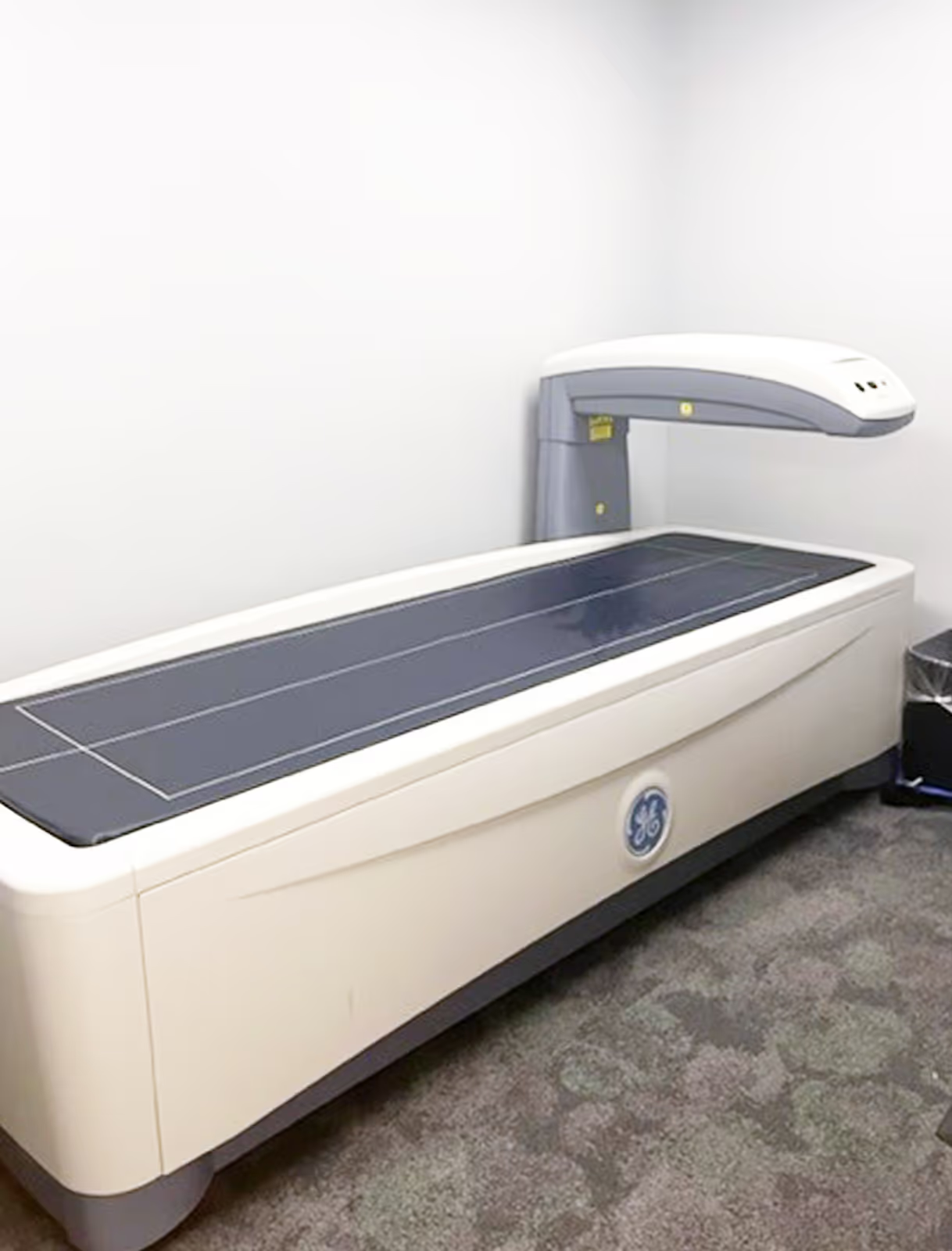
How often should you get a DEXA scan? There is no single schedule that fits every patient. The right timing depends on your age, previous bone density results, fracture risk, medical history, medications, and whether you're being treated for osteopenia or osteoporosis.
For some people with normal bone density and few risk factors, several years may pass before another bone density test is useful. Others may need closer monitoring after a low result, fracture, health change, or change in osteoporosis treatment. A repeat scan once every two years is common in some situations, but it shouldn't be treated as a universal rule. Bone density usually changes gradually, so your clinician can determine when another measurement is likely to provide useful information.
Advanced Medical Imaging (AMI) provides DEXA and other diagnostic imaging services in Lincoln, Nebraska. As Nebraska's largest independent radiology group, AMI combines subspecialized radiology expertise with a patient-focused approach to imaging care.
A DEXA scan, also called a DXA scan or bone density scan, measures bone mineral density, usually at the hip and lower spine. The results can help identify bone loss before a fracture occurs and give your clinician information to assess osteoporosis risk.
Age is one factor used to decide when screening should begin. Current screening recommendations support bone density screening for women age 65 and older. Postmenopausal women younger than 65 may also be candidates for screening when their fracture risk is increased.
A clinician may consider earlier testing when risk factors suggest that bones may be losing strength. These can include:
Bone density testing isn't only relevant to women. Men and other adults may also need a diagnostic evaluation when age, fractures, height loss, medications, persistent back pain, or medical conditions suggest increased risk. Routine screening guidance differs, so the decision should be based on individual circumstances rather than assuming everyone needs testing at the same age.
A baseline DEXA gives your healthcare provider a starting measurement. Once that result is available, your clinician can consider your bone density together with your medical history and fracture risk to determine whether future testing is needed and how far apart those tests should be.
Your previous result is one of the strongest factors in deciding when another DEXA scan may be useful.
A normal result generally supports a longer testing interval when there are no significant new risk factors. Someone with mild bone loss may also go several years between scans if their overall fracture risk remains low.
Osteopenia means bone density is lower than expected but hasn't reached the osteoporosis range. How often you should get a DEXA scan for osteopenia depends on how low the measurement is, whether bone loss appears to be progressing, and whether other fracture risks are present.
Osteoporosis may lead to closer monitoring, particularly after treatment begins or changes. A clinician may use follow-up testing to determine whether bone density is stable and whether the current treatment plan remains appropriate.
Terms such as once every two years, every other year, or every two years are often mentioned when discussing DEXA testing. Those intervals may be appropriate for some patients, but they're not universal.
A repeat DEXA is most useful when enough time has passed for a meaningful change to be detectable or when a new medical reason makes earlier testing worthwhile.
Your testing interval can change even if your original plan called for a longer wait.
A new fracture is one reason to discuss bone health again. A fracture resulting from relatively minor trauma may suggest reduced bone strength and could change how your clinician evaluates your osteoporosis risk.
Changes in medication can matter as well. Long-term corticosteroid use is associated with bone loss, and other treatments or medical conditions can affect bone health. If a medication that influences bone strength is started, stopped, or substantially changed, your provider may reconsider the timing of your next density test.
A shorter interval may also be discussed after:
The purpose of repeat testing isn't simply to accumulate measurements. Your care team is looking for information that can affect a decision, such as whether density remains stable, whether bone loss appears to be progressing, or whether treatment is producing the expected response.
That distinction is particularly important for people asking how often they should have a bone density test after age 65 or after age 70. Age alone doesn't establish the rescreening interval. An older adult with stable bone density and few additional risks may have a different schedule from someone of the same age who has osteoporosis, takes long-term corticosteroids, or recently experienced a fracture.
The same principle applies when osteoporosis has already been diagnosed. Repeat testing may be recommended to monitor treatment, but the schedule should reflect your baseline DEXA results, medications, fracture history, and care plan.
Bring previous scan reports when possible. Comparing measurements over time can give your provider a clearer picture of whether bone density is stable or changing.
DEXA uses a very low level of radiation and is considered a low-dose imaging procedure. The reason to avoid unnecessarily frequent testing is therefore not simply radiation exposure. It is also a matter of whether another scan is likely to provide useful new information.
Bone density usually changes gradually. When two tests are performed too close together, the difference may be too small to distinguish meaningful biological change from normal measurement variation. Repeating a scan quickly without a medical reason may therefore provide little additional value.
Rescreening intervals should account for how quickly your clinician reasonably expects bone density to change.
A patient with a normal baseline DEXA and low fracture risk may not need another scan for several years. A patient receiving osteoporosis treatment may have a different testing interval because the care team is monitoring response. Someone who develops a new fracture or begins a medication that affects bone may also need reassessment sooner.
The decision typically considers factors such as:
This individualized approach avoids treating DEXA testing as an annual routine for everyone. Insurance coverage can also depend on the reason for testing, medical necessity, and the individual insurance plan.
Once your clinician decides that another scan is appropriate, the examination itself is generally straightforward. DEXA measures bone mineral density using low-dose imaging. You lie still on a padded table while the scanner passes over the areas being measured, commonly the hip and lower spine. The procedure is painless, doesn't normally require an injection, and doesn't place you inside an enclosed scanner.
Preparation is also limited. Depending on the instructions provided for your appointment, you may be asked to pause calcium supplements before testing. Comfortable clothing without metal zippers, buttons, belts, or other metal around the hips and waist can make the appointment easier.
Bring any requested identification, insurance information, physician order, and previous DEXA records. Prior results may be particularly helpful when repeat testing is intended to evaluate change over time.
AMI's Lincoln facility offers DEXA as part of its diagnostic imaging services, along with MRI, CT, PET-CT, nuclear medicine, X-ray, and other imaging options. Its radiologists provide subspecialized interpretation, and the practice emphasizes accessible imaging and patient-focused care.
After your scan, the results are interpreted by a radiologist and sent to your referring provider. Your provider can then review the findings with you and discuss any recommended next steps.
There is no fixed DEXA schedule that works for every patient. Some people may go several years between scans, while others may need repeat testing every two years or on another interval because of osteoporosis, osteopenia, a fracture, medication use, or a change in treatment.
Your previous bone density result, fracture risk, age, health conditions, and current care plan should determine when repeat testing is worthwhile. If you're unsure whether it's time for another bone density test, speak with the healthcare provider managing your bone health. They can decide whether screening or diagnostic testing is appropriate and when another measurement is likely to provide useful information.
Advanced Medical Imaging offers DEXA/Bone Densitometry in Lincoln as part of its full-service imaging care. It's a quick, painless procedure used to measure bone loss and assist in diagnosing osteoporosis.
If your provider has recommended a DEXA scan, contact AMI to review scheduling, preparation, insurance, and appointment details. Bringing previous bone density records can also help your care team compare results and make informed decisions about future testing.
.png)


