


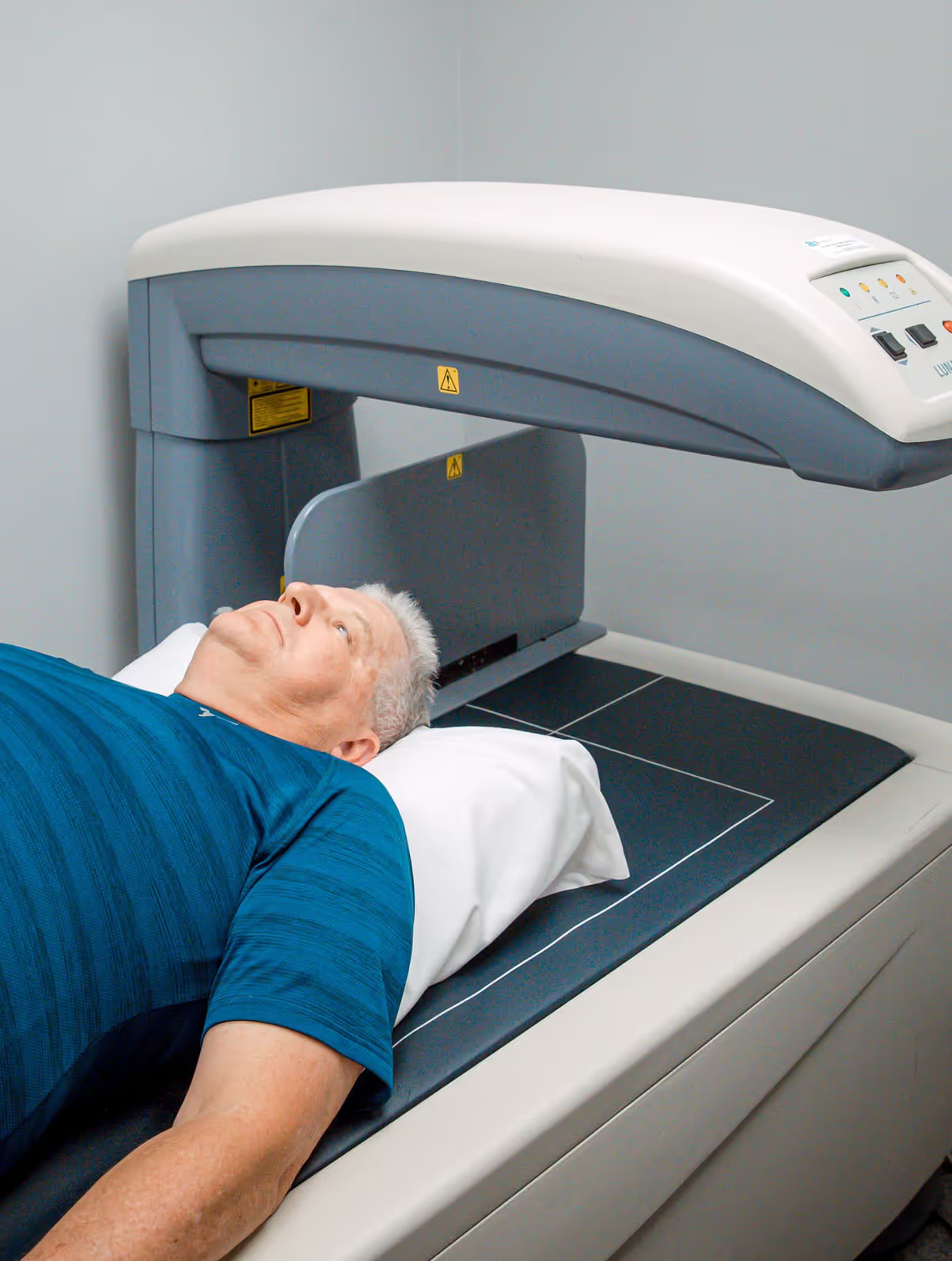
A DEXA scan is a low-dose X-ray exam that measures bone mineral density, most often at the hip and lower spine. Also called a DXA scan or bone density test, it helps healthcare providers assess bone strength, identify low bone mass or osteoporosis, estimate fracture risk, and monitor changes over time.
What is a DEXA scan? The name DEXA refers to dual-energy X-ray absorptiometry. The technology uses two low-energy X-ray levels to estimate the amount of calcium and other minerals in bone. Unlike many imaging exams, the test is quick, painless, and noninvasive. There are no injections or enclosed spaces, and radiation exposure is very low. According to the CDC, the amount of radiation used in a DEXA scan is very low and similar to a standard X-ray.
Advanced Medical Imaging (AMI) provides bone density testing in Lincoln, Nebraska, with exams interpreted by experienced, subspecialized radiologists. Understanding what the test measures, how it works, and what the results mean can make it easier to discuss bone health with your healthcare provider.
DEXA is an imaging test that measures the mineral content of selected bones. Bone contains calcium and other minerals that contribute to its strength. By measuring mineral density, the scan gives your healthcare team information that can help identify whether bone strength appears normal or reduced.
During the exam, two low-energy X-ray beams pass through the area being measured. The equipment analyzes how much of each beam is absorbed by the bone and surrounding tissue. That information is used to calculate bone mineral density.
A standard bone density scan most often evaluates:
The test itself is straightforward. You lie on a padded table while the scanner moves over the area being examined. The equipment doesn't surround your body, and no injection is required.
DEXA and DXA mean the same thing. Both refer to dual-energy X-ray absorptiometry, so patients may see either abbreviation in appointment information, medical records, or radiology reports.
Some DEXA equipment can also estimate body composition, including lean mass (muscle), fat mass, and visceral fat, the fat stored deep in the abdomen around your organs. If you're curious whether this type of scan makes sense for you, such as when tracking muscle and bone during GLP-1 weight loss, talk with your healthcare provider.
That application is different from diagnostic bone density testing. When a physician orders a DEXA for osteoporosis screening or fracture risk assessment, the focus is on bone mineral measurements and the clinical information they provide.
A healthcare provider may recommend bone densitometry when there is a reason to evaluate bone strength or determine whether bone loss has occurred.
Osteoporosis can develop without obvious symptoms. In some cases, a fracture is the first noticeable sign that bone strength has declined. A DEXA scan can identify reduced density before a fracture occurs, giving the care team information that may influence monitoring, lifestyle recommendations, medication, or other treatment decisions.
Testing may also provide a baseline measurement. That starting point can be compared with future DXA scans to determine whether bone mineral density remains stable, improves, or decreases over time.
Reasons a provider may recommend testing can include:
A density test doesn't tell your provider everything about your bones. The measurement is interpreted alongside your age, medical history, medications, previous fractures, family history, and other health factors.
DEXA testing may identify findings consistent with osteopenia or osteoporosis. Osteopenia describes bone mineral density below the expected range but not low enough to meet the usual threshold for osteoporosis. Osteoporosis indicates a greater reduction in density and is associated with increased fracture risk.
A DEXA scan isn't designed to diagnose every bone disorder. It also shouldn't be viewed as a general cancer screening exam. When symptoms or clinical findings suggest a different condition, your provider may recommend another type of diagnostic imaging.
For most patients, a DEXA appointment involves relatively little preparation and a short period on the scanning table.
Before the exam begins, the imaging team may review your medical information and preparation instructions. You may be asked about pregnancy, recent imaging, medications, supplements, or previous bone density testing.
Clothing can affect the scan if metal is positioned over the area being measured. Loose, comfortable clothing without metal zippers, buckles, snaps, or buttons around the hips and waist can make the visit easier. Depending on what you're wearing, you may be asked to remove jewelry or change into a gown.
During the exam, you lie on your back on a padded table. The scanner moves over the selected area while you remain still. You may be positioned slightly differently depending on whether the hip, spine, or another area is being measured.
The exam doesn't require an enclosed tunnel, and there are normally no injections. DEXA is a brief, noninvasive procedure involving a small amount of radiation compared with many common diagnostic imaging exams.
| Part of the Exam | What to Expect |
|---|---|
| Preparation | Follow instructions from your provider or imaging team and wear comfortable clothing when possible |
| Positioning | Lie on a padded table while the technologist positions the area being measured |
| Imaging | The scanner passes over the hip, spine, or another selected area |
| Comfort | The procedure is painless and doesn't require an enclosed scanner |
| Injections | None are normally required |
| Radiation | Very low-dose X-ray exposure |
| Afterward | Most patients can resume normal activities without recovery time |
Tell your provider or the imaging staff if you're pregnant or think you may be pregnant. Although DEXA uses very little radiation, pregnancy may affect the timing of an X-ray-based examination. Recent imaging can matter as well. When scheduling, ask whether a recent test involving contrast could affect the timing of your appointment.
The information from a DEXA scan is usually expressed through measurements and scores that help your healthcare provider interpret bone mineral density.
One commonly reported measurement is a T-score. A T-score compares your bone density with the expected density of a healthy young adult of the same sex.
The general T-score ranges as follows:
A report may also include a Z-score. Instead of comparing your measurement with a healthy young adult, the Z-score compares it with people of a similar age, sex, and body size. That comparison may be especially useful in younger adults and can help a provider decide whether additional factors affecting bone health should be considered.
The numerical score shouldn't be interpreted by itself. Your healthcare provider considers your DEXA results together with your broader medical picture. For example, two patients with similar density measurements may have different fracture risks because of differences in age, prior fractures, medication use, family history, or medical conditions.
A radiologist reviews the examination, assesses measurement quality, and prepares an interpretation for the referring provider. If previous studies are available, changes between examinations may also be considered. When possible, having repeat tests performed at the same imaging practice can support more consistent comparison over time.
Bone density testing is often associated with osteoporosis because DEXA provides a way to measure mineral loss before weakened bone leads to a fracture.
Osteoporosis causes bones to become less dense and more vulnerable to breaking. It can affect both women and men, although age, hormonal changes, health conditions, medication use, and other factors can influence individual risk.
A single DEXA result provides a snapshot of bone mineral density at a particular point in time. Repeat testing can provide a different kind of information by showing whether density remains stable or changes.
That can be useful when a provider is:
The amount of time between scans depends on the patient's circumstances. Bone density normally changes gradually, so testing too frequently may not provide meaningful new information. Your healthcare provider can determine when another scan is appropriate based on your previous result, treatment status, age, fracture history, and other risk factors.
Bone health decisions also extend beyond a score on a radiology report. Your provider may discuss nutrition, physical activity, medications, fall risk, and other factors after reviewing the findings.
DEXA itself doesn't treat bone loss. Its role is to provide objective imaging information that helps the healthcare team make informed decisions.
For patients with normal density, the result can establish a useful reference point. For patients with osteopenia, it can help determine the degree of reduced density. For those with osteoporosis, testing can contribute to treatment planning and subsequent monitoring.
Knowing what to ask before an appointment can make the process easier, particularly if this is your first bone density exam.
When scheduling a DEXA scan, you may want to confirm whether an imaging order or referral is required and whether there are preparation instructions to follow. It can also be helpful to have information about prior bone density tests available. Previous exams may give the radiologist and referring provider a useful basis for comparison.
Ask your scheduling team or healthcare provider about:
Cost and insurance coverage depend on your insurance plan, provider requirements, and the medical reason for the exam. Contact your insurer or the imaging center if you need information about expected costs before scheduling.
After the scan, direct questions about the meaning of your T-score, Z-score, osteoporosis risk, or treatment options to the clinician managing your care. The imaging report provides the measurements and radiology interpretation, while your healthcare provider can place those findings in the context of your overall health.
A DEXA scan provides a quick, low-dose way to measure bone mineral density and give your healthcare provider useful information about bone strength, osteopenia, osteoporosis, and fracture risk. The test is painless, doesn't normally require injections, and can also provide a baseline for tracking changes in bone density over time.
Advanced Medical Imaging provides DEXA bone density testing as part of its diagnostic imaging care in Lincoln.
If your healthcare provider has recommended bone density testing, contact AMI to discuss scheduling and preparation. The imaging team can help you understand what to bring, how to prepare, and what to expect during your visit, while your referring provider can review the results and determine the appropriate next steps for your bone health.
.png)


