


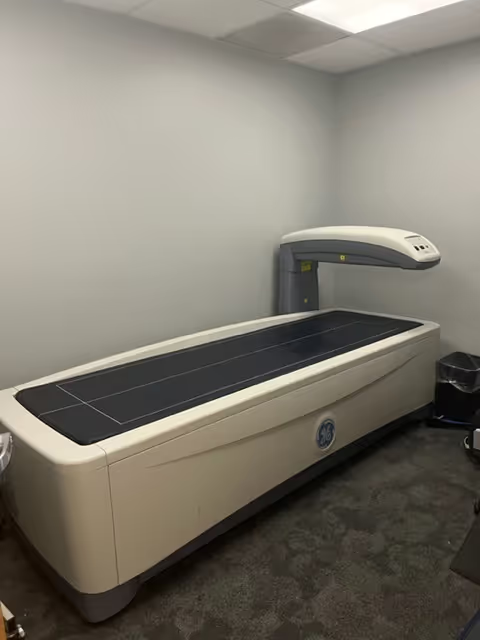
Knowing how to prepare for a DEXA scan can make the appointment easier and help the imaging team obtain accurate bone density measurements. A DEXA scan, also called a DXA scan or bone density test, uses a very low dose of X-ray radiation to measure bone mineral density, most often at the hip and lower spine.
Preparation is usually simple. Most patients can eat and drink normally, continue their usual prescription medications, and return to regular activities immediately afterward. The main steps involve avoiding calcium supplements for a short period before testing, wearing clothing without metal, and telling the imaging team about pregnancy or certain recent imaging exams.
Advanced Medical Imaging (AMI) provides bone densitometry and other diagnostic imaging services in Lincoln, Nebraska. AMI is Nebraska's largest independent radiology group, providing compassionate, patient-focused care supported by subspecialized radiologists.
A bone density scan requires much less test preparation than many other imaging procedures. There is usually no fasting, special diet, injection, or contrast material involved.
Unless AMI gives you different instructions, you may eat normally and drink normally before your exam. There is also no standard requirement to drink a certain amount of water before a DEXA scan. Staying normally hydrated is generally sufficient.
One preparation step deserves particular attention: calcium supplements. Calcium taken shortly before testing can potentially affect the examination, so patients are typically instructed not to take calcium supplements for 24 hours before the scan.
Use this checklist before your appointment:
If you have questions about a medication or supplement, ask before your appointment rather than making changes on your own.
Caffeine is another common source of confusion. Routine DEXA preparation generally doesn't require avoiding coffee or other caffeinated drinks. If you have received instructions not to consume caffeine, those directions may relate to another test scheduled for the same day. Follow the instructions AMI provides for your specific appointment.
Knowing what not to do before a DEXA scan can prevent unnecessary delays.
The first consideration is calcium. Don't take calcium supplements during the 24 hours before your density scan unless instructed otherwise. Check multivitamin and antacid labels as well, because calcium may be included in products that aren't marketed specifically as bone supplements.
Clothing is equally straightforward. Please wear loose workout clothes or similar comfortable clothing that doesn't contain metal near the areas being examined. Metal can interfere with imaging and may require you to remove an item or change into a gown.
Common items that may need to be removed include:
If you arrive wearing clothing with metal, it doesn't necessarily mean the exam must be canceled. The staff can tell you whether an item needs to be removed and may provide a gown when appropriate.
Patients sometimes ask whether lotion, deodorant, or other personal-care products need to be avoided. These products generally don't require the same restrictions as metal-containing clothing or calcium supplements for a routine DXA test. If your appointment includes another imaging procedure, however, follow the preparation guide provided for that procedure as well.
Food is normally allowed. Milk and other foods containing calcium aren't treated the same way as concentrated calcium supplements in routine DEXA preparation unless your healthcare provider gives you specific dietary instructions.
Certain recent imaging procedures can interfere with bone densitometry measurements. This is one of the most important details to mention when scheduling or checking in for your DEXA scan.
Tell the imaging team if you recently had an examination involving barium or contrast material. Barium may be used during some gastrointestinal X-ray procedures, while contrast is commonly used for certain CT examinations. Residual material can affect the image and may interfere with accurate density measurements.
A recent nuclear medicine exam can also matter because radioactive tracer may remain in the body for a period after testing. The appropriate waiting period depends on the procedure and material used, so there isn't one timing rule that applies to every patient.
Don't assume your DEXA appointment needs to be canceled simply because you recently had another test. Contact AMI and explain what type of imaging was performed and when. The staff can determine whether your DXA procedure can proceed or should be rescheduled.
Pregnancy should also be discussed before an X-ray-based examination. Although DXA scans use very low radiation exposure, tell your healthcare provider and technologist if you're pregnant or think you could be pregnant so they can determine the appropriate next step.
Previous DEXA results are useful for a different reason. If you have undergone bone density testing elsewhere, sharing that information may help your provider evaluate changes over time. Consistency can be particularly useful when testing is being used to follow osteoporosis or monitor response to treatment.
A DEXA scan is a noninvasive imaging procedure designed to measure the amount of mineral in specific areas of bone. Bone densitometry commonly evaluates the hip and lumbar spine because these areas are important when assessing osteoporosis and fracture risk. The forearm may also be tested in certain situations.
When your exam begins, you will lie on a padded table. The DXA equipment passes over the area being measured while you remain still. The scanner is open and doesn't enclose your body like some other imaging equipment.
The test usually takes approximately 15 to 30 minutes. It doesn't normally require needles, injections, or contrast material.
Positioning varies depending on the bones being measured. For a hip measurement, the technologist may position your leg to obtain the needed angle. During a spine measurement, your legs may be supported so the lower back can be positioned appropriately. Remaining still helps produce clear measurements.
Radiation exposure during DXA testing is very low. The procedure uses significantly less radiation than many standard diagnostic X-ray examinations.
The examination is performed similarly for women and men. The interpretation of the resulting measurements, however, can account for factors such as age, sex, medical history, medications, previous fractures, and other clinical information.
After testing, there's usually no recovery period. Most patients can leave immediately and continue their normal activities.
A DEXA scan measures bone mineral density rather than producing the same type of anatomical information as CT or MRI. The resulting measurements help your healthcare provider assess bone strength and determine whether bone density falls within an expected range.
A report may include a T-score. This compares your bone density with that of a healthy young adult of the same sex. A Z-score compares your measurement with people of a similar age and sex. These scores are interpreted together with your medical history and other risk factors.
Bone density testing can help your provider:
A density scan doesn't diagnose every condition affecting bones. It's also not designed as a cancer screening test. If your healthcare provider is concerned about cancer, fractures, infection, or another structural problem, a different imaging exam may be needed.
Your score is only one part of the assessment. Age, previous fractures, family and medical history, medications, and other health factors can influence what a result means for you.
For that reason, avoid trying to interpret a single number without clinical context. AMI's radiologists review the imaging and prepare a report for your referring healthcare provider. Your provider can then discuss your results and whether follow-up testing, lifestyle changes, medication, or other care may be appropriate.
Repeat DXA scans may be recommended when a clinician wants to assess changes in bone density over time. The timing depends on your circumstances rather than a single schedule that applies to every patient.
Preparing for a DEXA scan usually takes only a few simple steps. Avoid calcium supplements for 24 hours unless instructed otherwise, wear comfortable clothing without metal, eat and drink normally, and tell the imaging team about pregnancy, previous DEXA testing, or recent barium, contrast, or nuclear medicine exams.
Advanced Medical Imaging offers Bone Densitometry (DEXA) as part of its diagnostic imaging services in Lincoln, Nebraska. Its team includes board-certified and subspecialized radiologists, with a focus on accessible, patient-centered imaging care.
If you have questions about test preparation or need to arrange a bone density exam, contact AMI before your appointment. The imaging team can review your individual instructions, answer preparation questions, and help you arrive ready for your scan.
.png)


