


Most routine screening mammograms take about 15 to 20 minutes, although the entire appointment may last 30 minutes to an hour. Your total visit includes check-in, changing, reviewing your breast health history, positioning for the images, and any brief waiting time before you leave. A diagnostic mammogram usually takes longer because the technologist may need additional views of a particular area.
How long does a mammogram take? Knowing what happens during the visit can make it easier to plan your day and reduce uncertainty before your appointment. The process is usually straightforward, and the pressure applied to each breast lasts only a few seconds at a time.
Advanced Medical Imaging provides 3D digital mammography at its Women’s Center in Lincoln, Nebraska. AMI combines advanced breast imaging with a private, patient-focused environment designed to help women feel informed and comfortable. Its radiologists also specialize in breast screening and diagnosis, including care for patients with an increased risk of breast cancer.
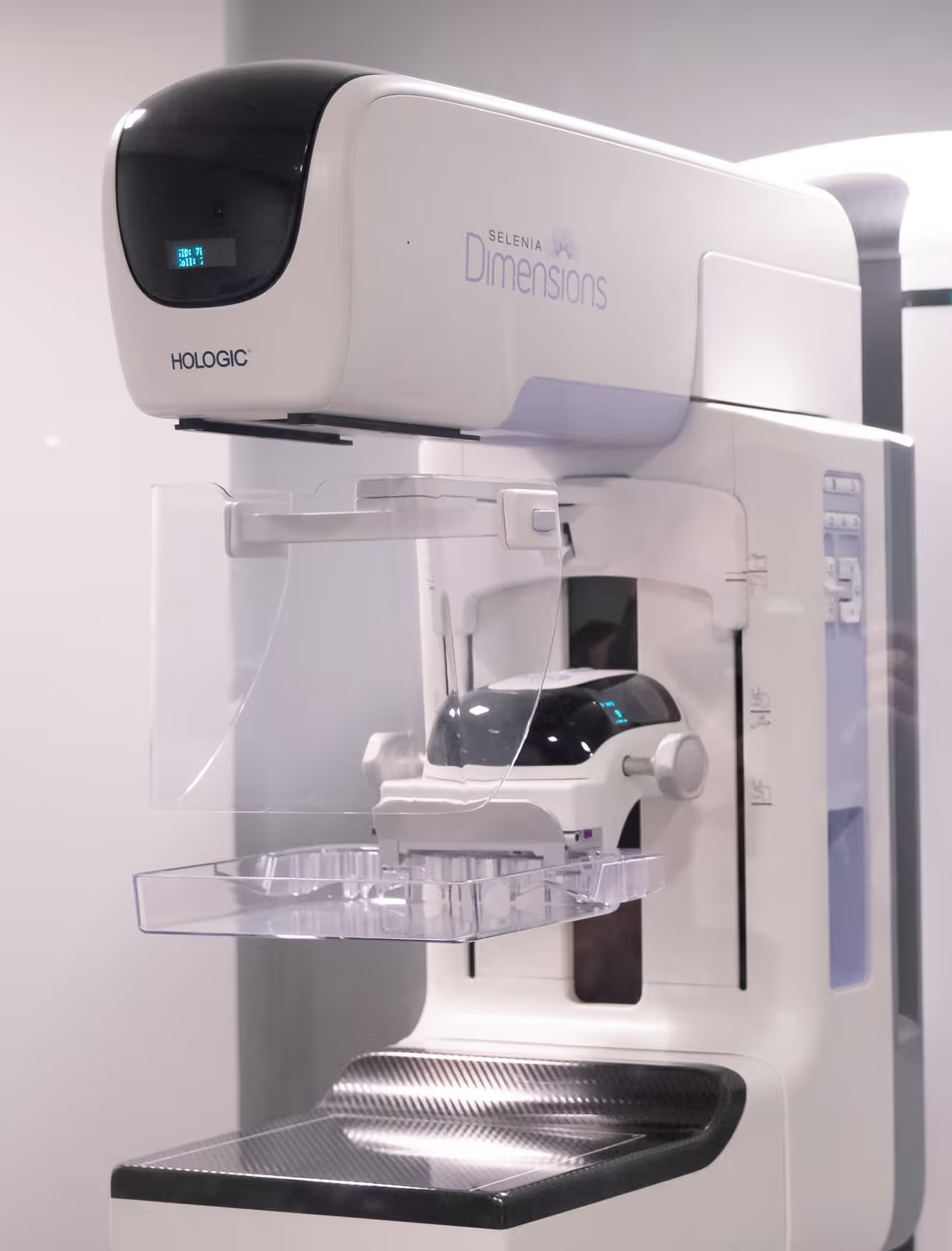
The imaging portion of a standard screening mammogram often takes less than 20 minutes. Most patients should allow approximately 30 minutes to an hour for the full appointment so there's enough time for registration, preparation, and the exam.
The exact timing varies by facility and patient. A first visit may take slightly longer because the staff needs to confirm your medical history, insurance information, prior breast imaging, and contact details. Returning patients who have already completed their paperwork may move through check-in faster.
Here's a practical estimate of how the appointment may be divided:
| Part of the Visit | Approximate Time | What Happens |
|---|---|---|
| Check-in and paperwork | 5 to 15 minutes | Staff confirms your identity, insurance, medical history, and exam information |
| Changing and preparation | 5 to 10 minutes | You undress from the waist up, put on a gown, and review relevant history with the technologist |
| Mammogram imaging | 10 to 20 minutes | The technologist positions and compresses each breast to obtain the required images |
| Additional waiting or instructions | 5 to 15 minutes | Staff confirms that the exam is complete and explains how results will be delivered |
These times are estimates rather than firm limits. Some appointments move faster, while others require additional time because of breast implants, mobility needs, prior surgery, difficulty with positioning, or extra images.
Scheduling can also affect the total visit. Arriving early gives you time to complete paperwork without feeling rushed. Patients using AMI’s virtual check-in option may be able to complete pre-exam paperwork before entering the waiting room.
A routine appointment generally doesn't include an extended discussion with the radiologist. The radiologist reviews the images after they're obtained, compares them with previous mammograms when available, and sends a report to the referring provider. The patient also receives information about the results according to the facility’s normal process.
After check-in, you'll be taken to a private changing area and asked to remove clothing from the waist up. You'll receive a gown or covering to wear during the exam. The technologist will confirm your identity and ask about your medical and breast health history.
Tell the technologist if you have:
This information may affect positioning or indicate that a screening appointment should be changed to diagnostic imaging.
During the exam, you'll stand in front of the mammography unit. The technologist will position one breast on a flat platform and lower a second plate to compress the tissue. You may be asked to turn slightly, move an arm, lift your chin, or hold your breath for a few seconds.
Compression spreads the breast tissue and reduces movement, helping the equipment produce clearer images with a low radiation dose. The pressure usually lasts only long enough to capture each view. A typical screening exam includes at least two standard views of each breast.
AMI uses 3D digital mammography, also called digital breast tomosynthesis. This technology obtains multiple low-dose images from different angles, allowing the radiologist to examine thin layers of tissue. AMI identifies 3D mammography as its standard technology for annual breast screening.
Although the mammogram itself is brief, careful positioning matters. The technologist needs to include as much breast tissue as possible while keeping you steady. It may take an extra minute to adjust your arm, shoulder, chest, or head before each image.
The technologist may repeat an image if movement, positioning, or a skin fold affects its quality. A repeated view doesn't necessarily indicate that anything abnormal was found. It often means the first picture didn't show the tissue clearly enough for the radiologist to interpret.
Once the required images have been collected, the technologist will tell you when you may get dressed. You'll also receive instructions about when and how to expect your mammogram results.
Not every breast imaging visit follows the same timeline. The type of mammogram and the number of images needed have the greatest effect on how long an appointment lasts.
A routine screening mammogram is intended for a patient who has no breast symptoms and is due for regular cancer screening. It generally follows a standard set of images and can often be completed quickly.
A diagnostic mammogram is used to evaluate a specific symptom, a finding from a clinical examination, or an area identified on previous imaging. Because diagnostic imaging focuses on a particular concern, the technologist may take magnified, compressed, or angled views. A radiologist may review the images while the patient remains at the center and request further views or a breast ultrasound.
Several circumstances can add time to the visit:
Breast implants: The technologist may need additional implant-displacement views to show the breast tissue positioned in front of the implant. These images require specialized positioning, so a mammogram with implants commonly takes longer than a standard screening.
New symptoms: A lump, localized pain, nipple change, or skin change may require diagnostic mammography rather than routine screening. The imaging center may also need an order from your medical provider before completing the diagnostic exam.
Prior breast surgery: Lumpectomy, reduction, reconstruction, biopsy, or other procedures can alter breast tissue and positioning. The technologist may need additional time to obtain clear images without placing unnecessary pressure on a sensitive area.
Mobility or physical limitations: Shoulder stiffness, difficulty standing, balance problems, or the use of a wheelchair can affect positioning. Let the imaging center know before the appointment so staff can plan appropriate assistance.
Dense breast tissue or an area needing further evaluation: Dense tissue alone doesn't always make the initial exam longer. However, the radiologist may recommend additional mammography, ultrasound, MRI, or another test depending on the images and the patient’s overall risk.
Missing prior images: Earlier mammograms help the radiologist determine whether a finding is new or stable. If prior records haven't arrived, comparison and completion of the report may be delayed even though the imaging appointment itself is finished.
A longer appointment shouldn't be interpreted as a sign that cancer has been found. The team may simply need clearer pictures, more angles, or additional clinical information.
Preparation can reduce delays and help the technologist obtain usable images without unnecessary repetition. Most mammograms require no fasting, medication changes, or recovery time.
Follow these steps before your visit:
You may eat, drink, and take your regular medications unless your provider gives you different instructions for another test scheduled on the same day. There's no sedation, so you can usually drive yourself and resume normal activities immediately afterward.
Some patients consider taking an over-the-counter pain reliever before the exam because they are concerned about tenderness. Ask your medical provider whether that's appropriate for you, especially if you have medication restrictions or other health conditions.
Plan to arrive at the time requested by the imaging center. Arriving too late may result in rescheduling, while arriving much earlier doesn't always mean the exam can begin before the assigned time.
AMI offers extended facility hours, including weekday evening and weekend availability. Because hours may vary by department and service, patients should confirm Women’s Center appointment times when scheduling.
Mammography requires compression, but the pressure for each image lasts only a few seconds. Some women describe it as tight or uncomfortable, while others report little difficulty. The experience depends on breast sensitivity, anatomy, implants, prior surgery, and the positioning required.
Tell the technologist if the pressure becomes painful. The technologist must obtain a clear image, but communication may allow for a small adjustment in position or compression. Remaining relaxed and following breathing instructions can also help the exam proceed efficiently.
After the images are complete, no recovery period is needed. Temporary tenderness may occur, but most patients return to work, errands, or other daily activities right away.
The time needed to receive results is separate from the length of the appointment. A radiologist must interpret the images and compare them with prior studies when available. The report is then sent to the referring provider, and the patient receives a result notification.
Waiting several days for a report doesn't mean the images are abnormal. Reporting time can depend on:
AMI states that same-day results may be available in qualifying situations, although restrictions apply. Its Women’s Center is an ACR-accredited Breast Center of Excellence and provides screening, high-risk screening, and diagnostic breast imaging in Lincoln.
An abnormal mammogram result doesn't mean that a patient has breast cancer. It means the radiologist identified an area that needs further evaluation or comparison. Additional mammogram views, breast ultrasound, short-term imaging follow-up, MRI, or biopsy may be recommended.
Don't wait for a routine screening appointment if you develop a new lump, unexplained nipple discharge, skin dimpling, nipple retraction, persistent focal pain, or another breast change. Contact your medical provider so the symptom can be assessed and the correct diagnostic test can be ordered.
For women at average risk, AMI follows the American College of Radiology recommendation to begin annual mammograms at age 40. Women with an increased risk may need to begin earlier or add other imaging to their screening plan. The ACR also recommends breast cancer risk assessment by age 25 so patients who may benefit from earlier screening can be identified.
A routine mammogram takes only a small part of the day, but it can provide information that isn't available through a physical examination alone. Allowing 30 minutes to an hour for the full visit gives you time to check in, prepare, complete the images, and receive instructions without feeling rushed.
Advanced Medical Imaging’s Women’s Center provides 3D digital mammography in a private setting with radiologists who specialize in breast screening and diagnosis. The center also supports patients who need high-risk screening, diagnostic evaluation, or follow-up after an abnormal result.
Before scheduling, tell the team about any symptoms, breast implants, prior surgery, mobility concerns, or previous imaging completed elsewhere. Providing these details helps AMI reserve the right appointment type and enough time for your needs.
Contact Advanced Medical Imaging in Lincoln to request a mammogram, confirm preparation instructions, or ask whether you need a screening or diagnostic appointment. AMI offers online appointment requests and direct scheduling support for patients seeking breast imaging and other radiology services.
.png)


